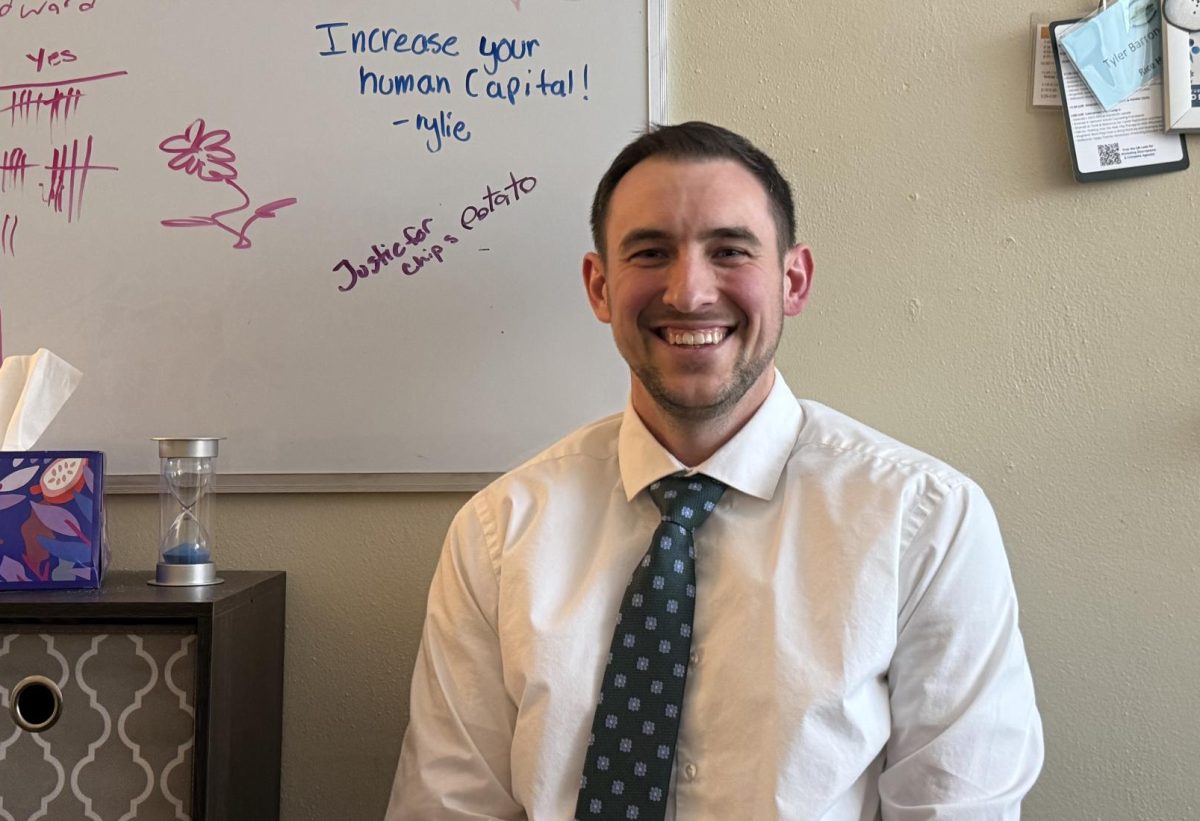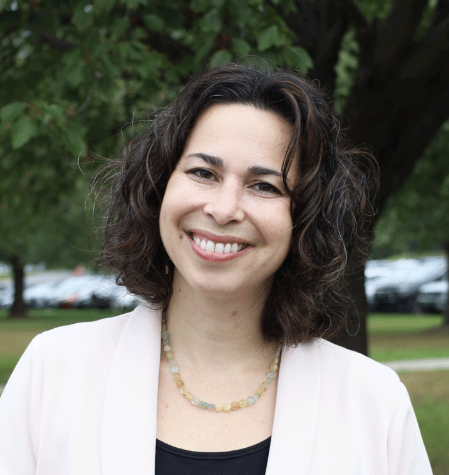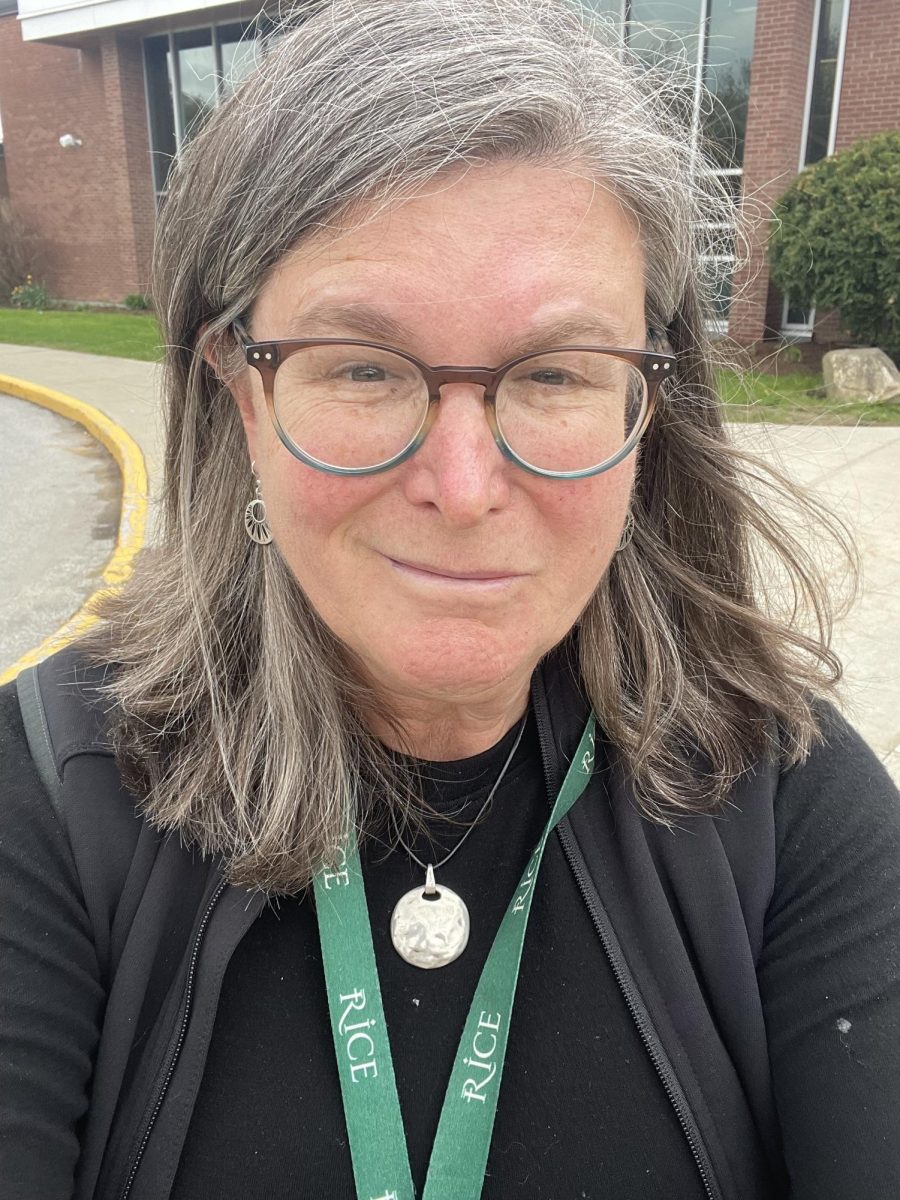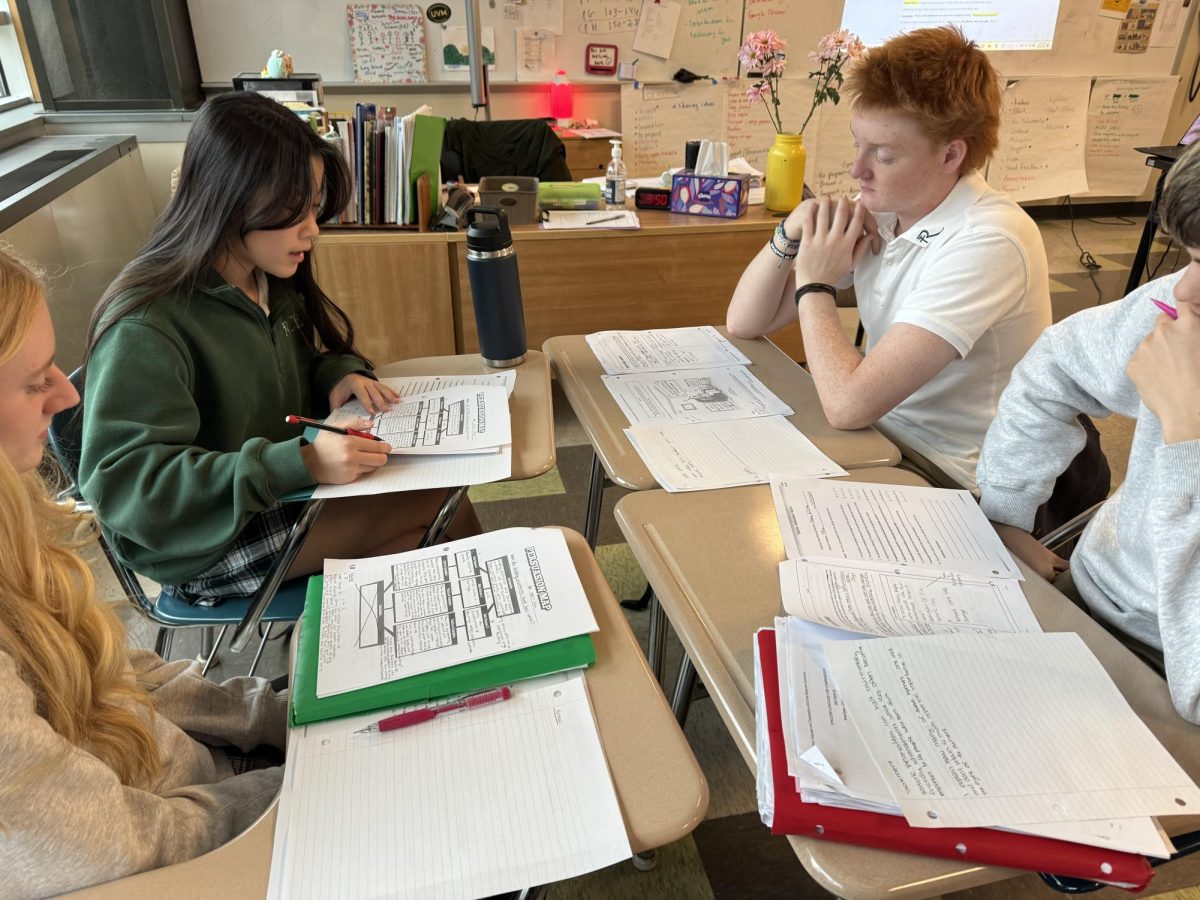

I had the opportunity to interview Katherine Fischer earlier this month, and her unique perspective on English, writing, and finding your passion was welcome and refreshing. She has followed her interests of English, literature, and reading and is now a tenth and twelfth grade English teacher at Rice Memorial High School, sharing her love for the subject and helping others to discover their voices.
What has been your experience teaching at Rice so far versus other schools that you’ve taught at?
I only have one other school to compare it to. I think you’ve heard of this place before. It’s called Mater Christi school… So that’s the only thing I have to compare it to. So middle school versus high school, but a lot of the same kids. So it’s really not that different, other than the age group is different, so adjusting to older teenagers as opposed to pre-teens and early teens. And I guess the school day looks a little different. It’s a bigger school. There’s more going on. Kids have more freedom. And I’m teaching older students, because I’m teaching sophomores and seniors, so half of my students are the oldest students in the school, which is pretty different. My oldest students at my last school were 13 and 14 years old, and I was teaching as young as 11 and 12. So 11 and 12 year olds versus 17 and 18 year olds. That’s a pretty big difference. The material isn’t that different because English, writing, reading, it’s not like math, right? Where you learn pre-algebra first, and then you learn algebra, and then you learn pre-calculus, and then you learn calculus. English and literature, it’s more fluid. It’s more about skills. And you’re kind of learning the same skills over and over and over again, just at deeper levels.
What is it like to see kids from Mater Christi School at Rice?
I love it. It makes starting a new job a lot less scary, when you know so many people. Yeah, that’s been a huge plus for me to know so many familiar faces. And I think I hope that my students feel the same way, that they are happy to see me in the halls and not turning around and running the other direction! No, I think most of them are very pleased, because a lot of my students are new students here too, right? Like all my eighth graders last year are all freshmen here this year. So they’re going through a very similar situation that I’m going through. The new kid on the block. It can be a scary experience, so it’s kind of nice that we’re going through it together in a way.
How long have you been teaching?
This is my fourth year as a teacher or someone in a classroom.
What are your favorite hobbies or things you do outside of school?
Do you mean to say that teachers have lives? This is news to me. I’ve told my students who are new to me about some of my hobbies. I really like gardening. I’m really into that. I spent a lot of the summer out in the yard, pulling up weeds and planting stuff. I just planted 21 trees this past weekend. I’m incredibly sore. I guess a hobby that maybe students don’t know is, and you know this now, is that I’m really into weight lifting and strength training… That is a big part of my life. I feel very strongly about that, because I love playing sports. Obviously, I love playing soccer and strength training is how you allow yourself to continue to play sports as much as you want for as long as you want with minimal injuries, right? So I want to be playing soccer until I’m 85 years old, and strength training is how you do that. I also just think for women and girls in particular, it’s something that… they’re not always exposed to. There’s this idea that it’s not for them, and actually it’s so important for anyone, not even athletes, regular people, you know, you need to be strong. So, I play a lot of soccer.
What are you looking forward to in this first year at Rice?
I’m excited for the Poetry Out Loud thing, I’m interested to be a part of the process. I forget what it’s called, but the thing that the seniors do, the interviews that they do before they graduate, where they have to kind of talk about their experience.
Oh, CSL projects!
I like this idea of students having to kind of reflect and and and talk about what they’ve learned and how they’ve grown. I think that that’s such an important part of the process of learning, and it’s kind of a nice way to close one chapter and go to the next.
Has coaching soccer been a good way for you to get to know more kids?
I’ve loved coaching and getting to know the girls. It’s such a nice group, I think it’s really helped me get to know more people outside of just Mater Christi kids, and it’s a nice mix of different grades. So I’m getting to know some seniors and freshmen, sophomores, juniors, the whole gamut. And I think there aren’t that many teacher coaches here. There’s just a few of us. Mr. DiFalco, me, Miss Schmitt. Those are the only ones I’m aware of right now. I think that’s such a unique and helpful dynamic, because you get to see kids in different contexts, and so you can see where kids thrive and shine, and you can see this kind of… different side of students. And I also think having a coach who has, kind of, their eyes and ears inside the school, knows kind of what’s going on in school, that’s really helpful. I feel like… if you’re also [students’] coach, you just know them even more than you would a regular teacher. So I think it’s been great. It gives me better insight into the culture of the school and stuff to be out there for so many hours per week with the team.
What made you want to come to Rice?
So, my goal has always been to teach older students, because what brought me to the teaching profession was the material, English itself, literature, reading. Some people become teachers more because they want to be teachers, and that’s not… It’s not that I don’t want to be a teacher. It’s that I kind of ended up becoming a teacher through the subject. Yeah, I was studying English and literature, and so passionate about those things, and then kind of ended up in the teaching career. And I loved teaching at Mater Christi. That school is an amazing community, but I wanted to be able to teach older students, and thus more deeply engage in the material. I think as your students get older and their critical thinking skills and their reading comprehension skills go up,you’re just able to kind of sink your teeth into the material even more. And I’m a nerd about that stuff, so that’s what I like. So that was kind of the idea behind switching; as you move up through schools, the material becomes more the focus… So that was kind of what drew me here, and I knew that it wouldn’t be a particularly challenging transition even though, obviously, switching jobs is always kind of a transition, because I knew that it would be, essentially, kind of like an extension of the Mater Christi community. And, you know, most of our students from Mater Christi come here. We have the same parents. There’s teachers who have come back and forth, like Mr. Welsch came from Mater Christi… I knew that it would be a fairly seamless transition.
Do you have any pets?
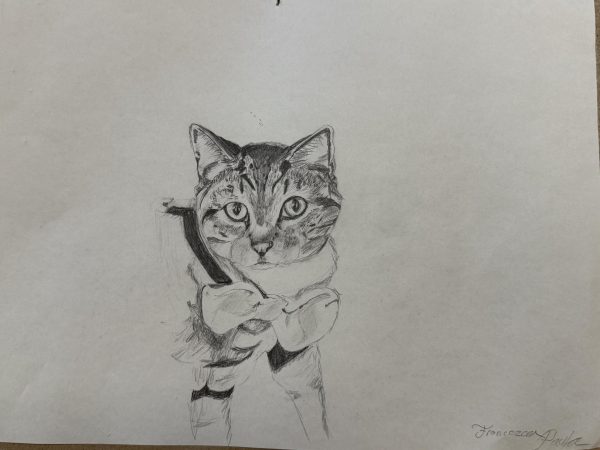
You know I have a pet. There’s a drawing of him right over there. He is my world. So that’s Ives. And he is an absolute menace, but also everything. We have taken him on hikes recently, in a backpack of course, cats don’t walk in a straight line. But he’s kind of famous around Burlington, not actually, but I like to think he’s famous, like this weekend when I was planting my 21 trees, I tied him up on his leash out in the yard, and he’s just eating grass and laying down and sleeping, and he just, he’s really not a typical cat. So, yeah, that’s Ives… I want to bring him to school, but people are allergic.
When did you realize that you wanted to be a teacher?
I was definitely not one of those people who at a young age thought that. I think a lot of people assume that people who are teachers have wanted to be teachers forever, and I’m sure that’s some, but it was not me, not that I didn’t want to be a teacher. It wasn’t what I was planning. I actually wanted to be a journalist for a large part of my high school. I was on my high school newspaper, which was a bit larger of a production than what you guys have going here. Yeah, I’d love to help you guys get there at some point, because I think it’s such a great thing, and I’m so happy that you’re doing it, because it really teaches you the power of your voice. But I think what I do as a teacher is not really that [different]… I mean, it is very different than being a journalist, but the values underneath it are very similar. I’m doing the same thing, or at least trying to as a teacher, right? Teaching students the value of their voice. One of my favorite things to work on with students is their writing. And I think that that’s what makes me so lucky, compared to a teacher who doesn’t teach writing, because I get to see this whole other side of students. They share sometimes very personal stuff in their writing. And so I get to see this whole other side and get to know them on a deeper level. But I would say, the moment when I decided I want to be a teacher… I don’t know. I mean, I was in graduate school getting my master’s in English during Covid, okay? And I kind of had this, okay, What now? thing where I didn’t really know what the next step was. I’d gone back to school and got my master’s. Most of the people in my program were going to continue on and get a PhD. I didn’t think that that was the right path for me. Because when you go get a PhD, you often have to move far away. You go where there are programs and where you get accepted, they’re very competitive, and I didn’t necessarily want to go down that path, because most of those people go to become professors. So what’s the next kind of best thing? Right? Being a high school or middle school teacher, you’re doing basically the same thing, just kind of with a younger population. So that’s kind of how I ended up in teaching. But I knew I didn’t want to work like an office job. I did that a little bit after college, and I was bored out of my mind just sitting at a desk all day sending emails. I just knew that that wasn’t for me. And so teaching was appealing because it’s very dynamic, and you’re around lots of different people, and you’re getting up and you’re walking around and the day, there’s just so much change in the day. And it’s very social, right? And I’m an extrovert, so I like being around people, so that’s kind of how I fell into the career. I guess that’s a long answer.
If you could meet any famous author, living or dead, who would it be?
Oh my gosh, this is so hard. This is gonna just sound so cliche, but it’s Shakespeare. Yep, I was one of those high schoolers who read Shakespeare and was like, I don’t get it. Who is this guy? What is he saying? Why is he so famous, right? So I used to not be a believer in the Shakespeare lore, and then in graduate school, I took a Shakespeare class, and something clicked for me, and I realized that Shakespeare understands humans more than anybody… ever. I just think he would have such an interesting perspective on the world today, on humanity, on how people interact and treat each other, that I’d love to just pick his brain. But why he’s so famous is because his stuff is just as relevant today as it was when he published it. And there’s so few authors, playwrights, artists, who we could say that about. He just understood what it meant to be human at such a deep level, and the perception of him is very false. People assume because he’s writing in … Modern English… He’s stuffy. He’s boring. It’s for only really educated people. And the reality was, when he was writing those plays, people were going to them as if you go to watch a Lake Monsters game or go to a music festival. It was for the masses and people would be standing in the crowds, you know, eating a turkey leg. That’s what it was. And we see it in such a different way now, and it’s actually not accurate. So that’s what’s cool about him, is that he’s kind of misunderstood, but he was way ahead of his time.